Natural Stone Countertops That Stand Up to Family Life
 By toped agency
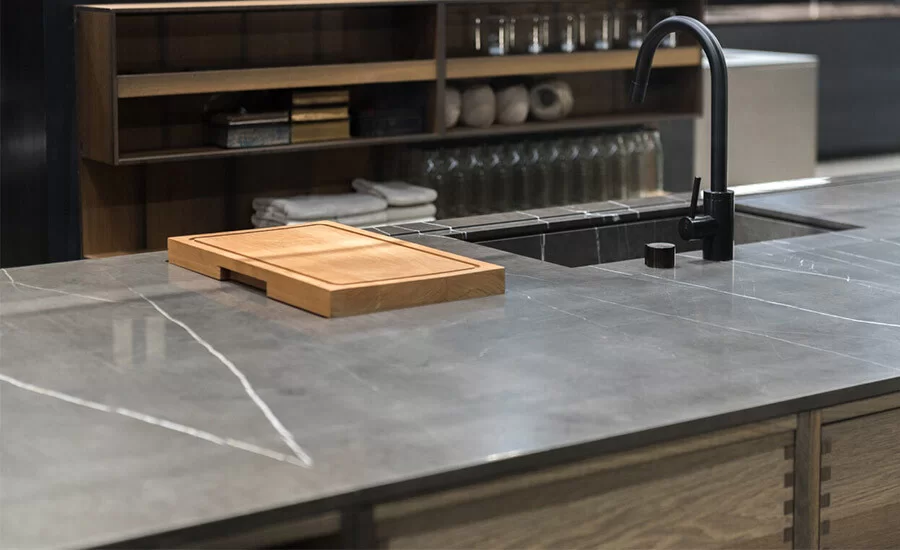
Your kitchen counter does a lot of jobs. It is a cutting board, a homework desk, a hot pan rest and a snack bar. And that is all before breakfast is done.
That is a lot to ask of one surface. Natural stone can handle it, but not every stone handles it the same way. Some stain. Some need sealing. Some chip at the corners.
This guide compares the popular choices in plain words. You will see how granite, quartzite and slate cope with real family mess, and what to ask before you buy.
Natural Stone Countertops for Family Life at a Glance
Pick a stone that fits the way your family really lives. Granite is tough and resists scratches, but it is porous and needs sealing. Quartzite handles heat well, yet it can also be porous. Slate is non porous, heat resistant and low on upkeep, with a calm matte look, but its corners can be brittle and some finishes show scratches. Choose a finish that hides wear, like a cascade face for slate. Ask for rounded corners and edges if you have kids. Wipe with a pH neutral cleaner and use a board for chopping. Last, ask for a real sample and ask how the stone should be sealed. With the right match, natural stone can last for decades.
What Family Life Does to a Countertop
Think of five daily tests. Judge every stone by these, not just by how it looks in a showroom.
- Heat. A pot comes off the stove and lands on the counter.
- Spills. Juice, sauce, coffee and oil all take a turn.
- Knocks. A heavy pan drops, or a lunch box swings by.
- Cleaning. You wipe it ten times a day.
- Time. It must still look good in ten years.
How Granite Quartzite and Slate Handle Daily Mess
HomeGuide’s comparison of slate, granite and quartz is a handy starting point. Here is how the three natural stones compare, based on its notes.
| Stone | Pores and stains | Heat | Watch out for |
| Granite | Porous, so it needs sealing | Handles heat well | It resists scratches, but you must keep up with the sealer |
| Quartzite | Porous, so it needs care | Handles heat well | Ask how it should be sealed |
| Slate | Non porous and stain resistant | Heat resistant | Corners can be brittle, and some finishes show scratches |
You will often see quartz sold beside these stones, but it is man made. HomeGuide notes that quartz is non porous and scratch resistant, yet it can be damaged by high heat.
Where Slate Fits in a Busy Home
Slate is a quiet hero. Britannica explains that slate forms from shale or mudstone and splits into thin, strong slabs. In a kitchen, that gives you a dense, matte surface in deep grays and blues.
It passes the heat test and the spill test well, because it does not soak up liquid. HomeGuide adds that lighter and darker colors show stains more, while African slate is said to hide imperfections and scratches. So choose the shade whose marks bother you least.
If you are weighing slate countertops for busy kitchens, this guide compares slate with granite, quartz and artificial stone, and it covers colors, edges and care.
Choose a Slate Finish That Hides Daily Wear
The face of the slate matters as much as the stone. HomeGuide lists three common ones.
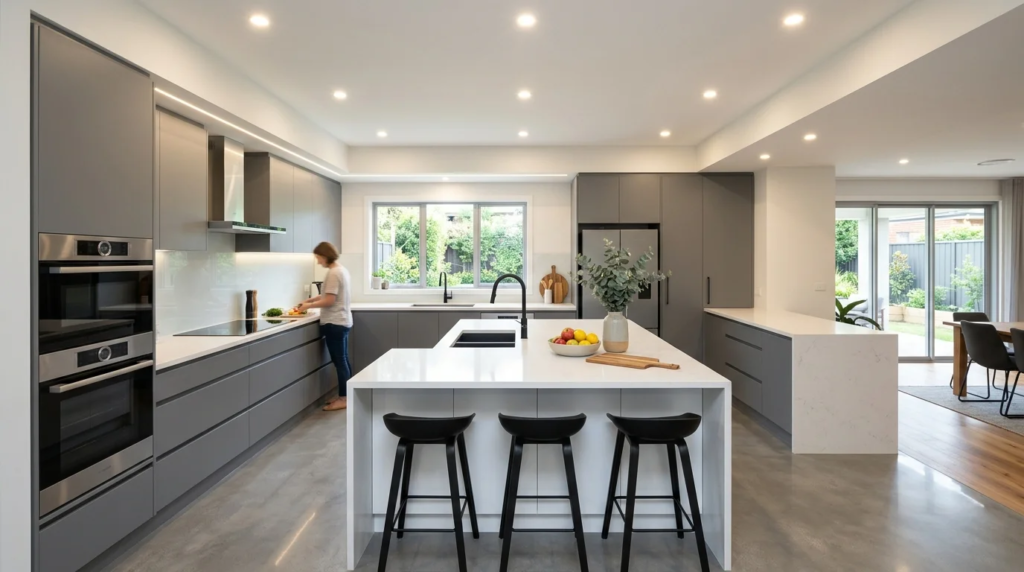
Natural cleft is rough and layered. It traps crumbs, is harder to clean and can chip under heavy use. Cascade is nearly flat with a slight ripple. It hides scratches and smudges and is easy to look after. Honed is smooth and flat. It shows scratches, dust and fingerprints, but it is easy to restore and can be sealed.
For a busy family kitchen, cascade is often the practical pick. Honed looks sleek but shows more. Cleft is best kept for a feature wall.
Pick Edges and Thickness for Kids and Knocks
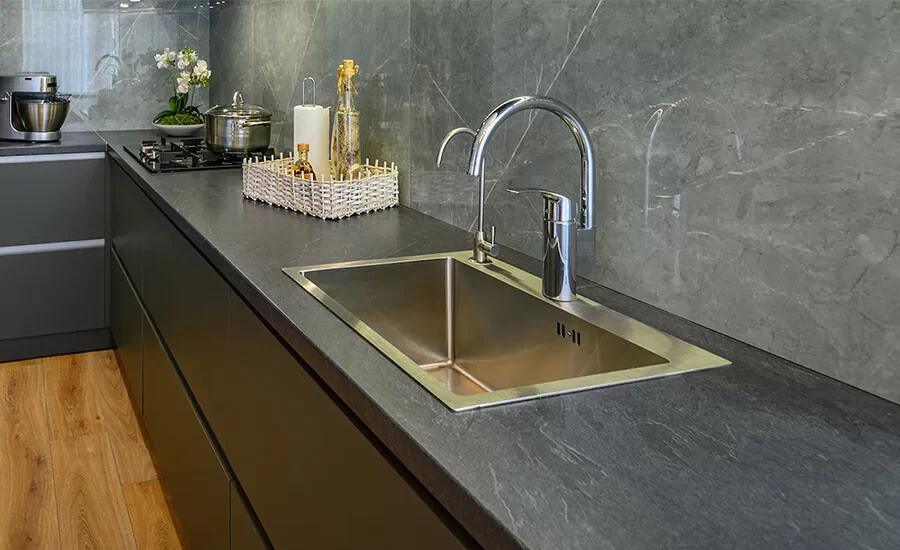
Corners take the hits. HomeGuide says slate corners can be sharp and brittle, so installers often round them. A rounded edge is also kinder to small heads and elbows.
Common edge styles include straight, beveled, bullnose and ogee. Slate is often cut in 20mm or 30mm thickness. Ask to see the edge on a real sample before you decide.
Simple Daily Care That Keeps Stone Looking Good
Good habits beat fancy products. Wipe spills quickly with a soft cloth. For deeper cleaning, Angi’s guide to pH neutral cleaners says to avoid vinegar, lemon juice, bleach and ammonia on natural stone. A drop of pH neutral dish soap in warm water is a safe bet.
Use a cutting board, because slate is a softer stone than granite. Keep heavy pots from hitting the edges. HomeGuide describes slate as non porous, but says honed slate can be sealed to resist smudges, so ask your supplier what they advise.
With good care, natural stone like slate can last 100 years or more, according to HomeGuide.
Questions to Ask Before You Buy
Take this short list to the showroom or send it to your supplier:
- Which finish is this, and how does it wear day to day?
- Does this stone need sealing, and how often?
- Can the corners and edges be rounded?
- What thickness and edge styles do you offer?
- Can I see a real sample in my own light?
Also ask about matching cabinet door samples. A factory direct maker such as Parlunbuilding can be one option to compare when you plan stone and cabinets together.
Natural Stone Countertop FAQs
Are Slate Countertops Good for Kitchens
For many homes, yes. HomeGuide describes slate as non porous, heat resistant and low maintenance. Its corners can chip, so ask for rounded edges and pick a finish that suits your family.
Do Slate Countertops Scratch Easily
It depends on the finish. Slate is a softer stone than granite. Cascade slate hides scratches well, while honed slate shows them more. Use a cutting board either way.
Do Slate Countertops Need to Be Sealed
Often not, because slate is non porous. Honed slate can be sealed to resist smudges, though. Ask your supplier what they advise for the exact stone you choose.
How Long Do Slate Countertops Last
HomeGuide says natural stone like slate can last 100 years or more when it is well cared for. Gentle cleaning and careful use help it reach that mark.
Final Thoughts on Choosing Stone for Your Family
The best stone is the one that fits how your family lives. Run it through the five daily tests, pick a forgiving finish and ask for rounded edges. Then enjoy a counter that keeps up with the busiest days.